Podcast Intelligence Hub
The Strategic Counter-Offensive: Weaponizing a Rival’s Launch

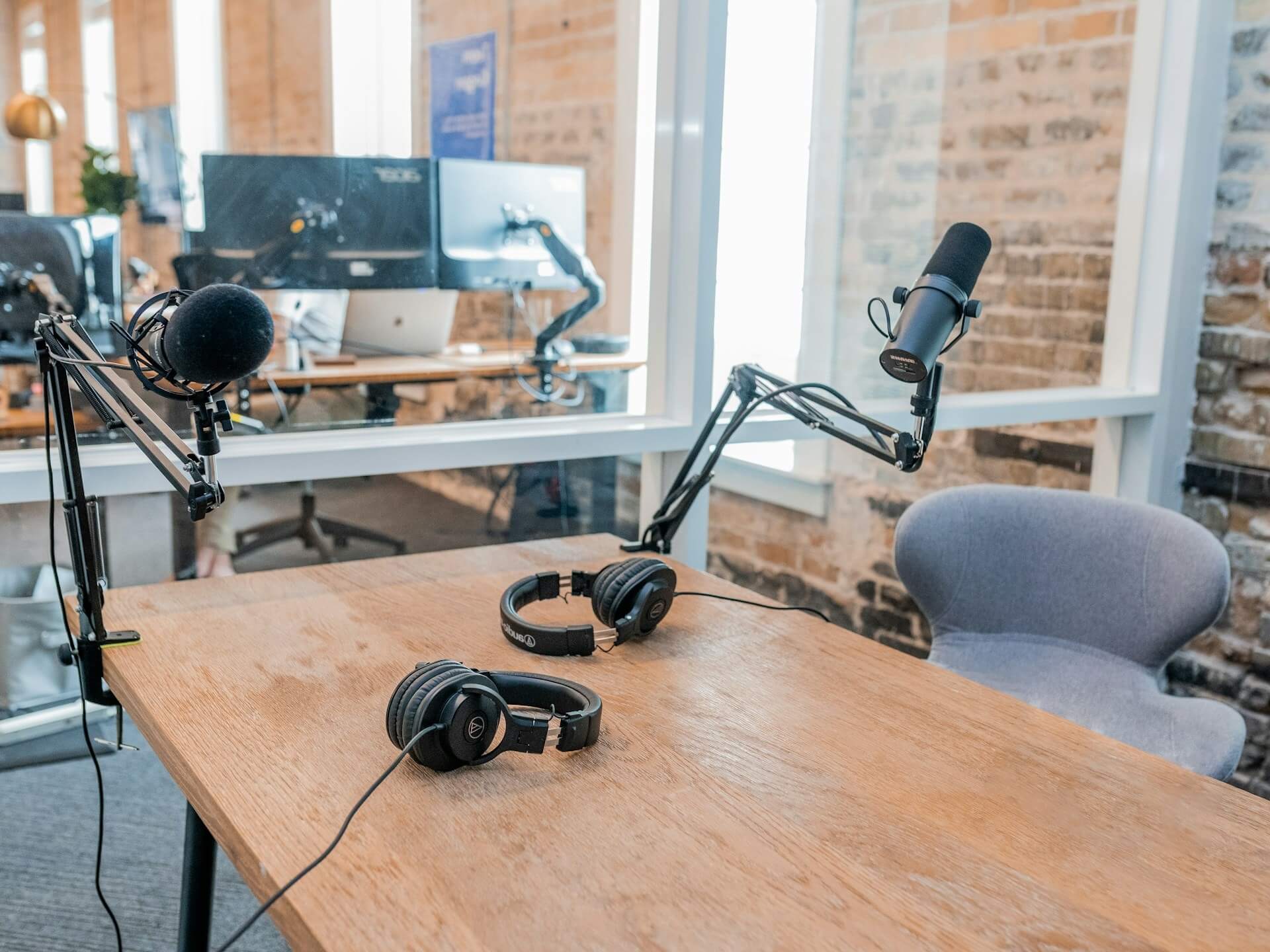
To weaponize a rival’s launch, you intercept the claims they repeat across their podcast tour, identify the one assertion their evidence cannot support, and publish a data-backed counter-narrative during the exact week their interviews go live. The mechanics are precise: monitor every show they appear on, transcribe the recurring talking points, isolate the weakest claim, and release your contrarian angle into the same conversation while the audience is still warm. Timing is the entire game. A counter-narrative published three weeks after their tour reaches an audience that has already moved on. The same argument published within 72 hours of a flagship interview rides their own momentum and reframes the story before it sets.
A competitor’s media tour is the moment they are most exposed. They are repeating a tight set of claims to build a narrative, which means those claims are predictable, scriptable, and open to interception. Most operators watch a rival’s launch with anxiety. The sharper move is to treat it as a calendar you can plan against.
Why a launch tour is a window, not a wall
When someone runs a podcast tour, they are not improvising. They are deploying a message track: the same three or four claims, the same anecdote, the same framing, delivered across a dozen shows over two or three weeks. The repetition is deliberate. It is also a gift.
That repetition tells you exactly what they want the market to believe. It also tells you what they are betting their positioning on. Find the load-bearing claim and you have found the thing that, if it cracks, takes the whole narrative with it. The audience hearing it on show number seven is primed and curious. They are the most receptive audience you will ever have for a counter-argument, because the question is already in their head.
Step one: extract the repeated claims
You cannot counter what you have not mapped. The first task is to capture every claim your rival makes across their tour and rank them by frequency and confidence.
- Catalog every appearance. List each show, each episode date, and each host. A tour is rarely announced as a tour, so the shape only becomes clear once you see the appearances side by side.
- Pull the recurring lines. Transcribe the segments and look for the phrases that appear in three or more interviews. Those are the rehearsed claims, the spine of the campaign.
- Grade each claim. Separate the defensible claims from the soft ones. A defensible claim has data behind it. A soft claim is a sweeping generalization, a borrowed statistic, or a prediction dressed as a fact.
The soft claim is your target. It is the one stated with the most confidence and the least evidence, the line they lean on hardest precisely because it is doing the most persuasive work. That gap between confidence and proof is where your counter-narrative lives.
Doing this by hand across a fifteen-show tour is slow, and the timing window closes while you are still transcribing. Seraphina Podcast Intelligence maps a competitor’s full podcast footprint over a rolling 90-day period, surfaces the claims they repeat across appearances, and flags the high-reach shows carrying the message. You see the message track assembled while the tour is still live, not after it ends.
Step two: build the contrarian angle
A counter-narrative is not a rebuttal. A rebuttal is reactive and defensive, and it cedes the frame to your rival by arguing on their terms. A counter-narrative establishes a new frame and forces their claim to defend itself against yours.
The strongest angles share a structure. They concede the surface point, then reverse the underlying takeaway with evidence.
- Concede and pivot. “They are right that the market is shifting. They are wrong about which direction, and the data shows why.” This signals fairness and disarms the reader before you land the counter.
- Replace the metric. If their claim rests on a vanity number, introduce the number that actually predicts the outcome. You are not disputing their figure. You are demoting it.
- Reframe the category. If they are claiming leadership in a category, argue the category itself is the wrong one to measure. This is the most durable move because it cannot be answered with their existing talking points.
The third move connects to a deeper trap operators fall into when they measure their own standing. Most assume that being mentioned more often equals winning. It does not, and the gap between volume and influence is the subject of a separate briefing on the illusion of share of voice in B2B markets. Understanding that distinction is what lets you reframe a rival’s loud claim as noise rather than authority.
Back it with data they cannot dispute
A contrarian angle without evidence is just a louder opinion, and it loses. The counter-narrative that works carries a number the audience can verify. Pull from your own customer data, a public dataset, a survey you can stand behind, or a documented case. The evidence does not need to be exhaustive. It needs to be specific, sourced, and inconvenient for the rival’s claim.
Step three: time the release to their tour
This is where most operators fail, and it is the single most important variable. Your counter-narrative must land while the rival’s claim is still being repeated and the audience is still hearing it. The half-life of a podcast talking point is short. Once the tour ends, the conversation cools within days.
The execution sequence:
- Watch for the flagship. Most tours have one anchor appearance on the highest-reach show. That episode is your trigger.
- Publish within 72 hours. Release your counter-narrative as a post, a thread, a short video, or a guest spot of your own, timed to the days the flagship episode is circulating.
- Seed it into the same channels. Drop your angle into the comment sections, the communities, and the social conversations forming around their interviews. You want your frame visible to anyone searching their claim.
This is the interception play, and it only works if you know the tour is happening before the flagship airs. Seraphina’s monitoring catches a rival’s appearances as they publish and signals the high-reach episodes in the run, so you are positioned to release on day one rather than discovering the tour a week late. Its narrative-mapping function pulls the repeated claims into a single view and drafts ready-to-post counter-responses tuned to the specific assertion, which compresses the work from days into hours.
The move nobody spells out: pre-position before they launch
The advanced version of this play does not wait for the tour. It anticipates it. Rivals telegraph launches. A funding round, a book deal, a product release, or a new hire in communications all precede a media push by weeks. When you see those signals, you can predict the claims before they are made.
Here is the play. The moment you spot the pre-launch signal, you publish the data-backed counter-narrative first, before their tour begins. Now when their interviews go live and they make the claim you predicted, the informed segment of their audience has already encountered your frame. Your argument is the established position, and theirs sounds like the response. You have inverted the entire dynamic. They are no longer launching a narrative. They are walking into one.
This requires reading a competitor’s trajectory with discipline, and it is the highest-leverage version of competitive positioning available to an operator who is not the loudest voice in the room. The full mechanics of claiming and holding a narrative against a better-resourced rival are covered in the playbook for competitive positioning and narrative hijacking.
Be honest about where this gets hard
This is not a free move, and it carries real risk. Three things will sink an undisciplined counter-offensive.
- Thin evidence backfires. If your data is weak or cherry-picked, a sharp host or audience will dismantle it, and you will have amplified your rival’s claim while damaging your own credibility. Only run the play when your evidence is genuinely strong.
- Petty energy reads as fear. If your counter-narrative sounds like an attack on the person rather than a correction of the claim, you look small and they look established. Stay on the argument. Never go after the individual.
- The timing window is unforgiving. Miss the 72-hour window and you are publishing into silence. The work of monitoring, drafting, and verifying has to be ready to fire on a trigger you do not control.
The honest reality is that the strategy lives or dies on speed and evidence. The operators who win it are not the ones with the cleverest angle. They are the ones who saw the tour coming, had the data ready, and published while the conversation was still hot.
Frequently Asked Questions
How do I know a competitor is running a podcast tour?
A tour reveals itself as a cluster of appearances on multiple shows within a two to three week window, usually tied to a launch, a funding event, or a book. Watching a single show will not show you the pattern. Continuous monitoring of a rival’s full podcast footprint surfaces the cluster as it forms, often before they have finished booking it.
What if my counter-narrative just gives my rival more attention?
That risk is real and it is why the angle matters. A defensive rebuttal amplifies them. A counter-narrative that introduces a new frame and a verifiable number redirects the attention to your position instead. The test is simple: if your piece can stand alone as a useful insight without naming the rival, it will work. If it only makes sense as an attack, do not publish it.
How fast do I actually need to move?
Aim to publish within 72 hours of the flagship appearance in their tour. Podcast talking points decay quickly, and the audience that heard the claim is most receptive in the first few days. This is why the drafting and the evidence need to be prepared in advance, triggered by the appearance rather than started by it.
Can I do this without naming the competitor at all?
Yes, and it is often the stronger move. You counter the claim, not the company. “Here is why the conventional wisdom on this is wrong, and the data behind it” addresses the same audience without handing your rival a named foil. Anyone who heard their interview connects the dots themselves, which is more persuasive than you drawing the line for them.
What kind of evidence holds up best?
Proprietary data from your own operations is strongest because no one else can dispute it. Public datasets and documented case studies work well as second-tier support. Avoid borrowed statistics or predictions, which are exactly the soft claims you are exploiting in your rival, and which leave you open to the same counter.
How do I extract a rival’s repeated claims without listening to every episode?
Manual listening across a full tour does not finish inside the timing window. Seraphina transcribes a competitor’s appearances, isolates the claims they repeat across shows, and presents them in one view with the high-reach episodes flagged. You read the message track in minutes and move straight to building the counter.
Does this work if my rival has a much larger audience than I do?
It works especially well in that case. A larger rival has more invested in their narrative and is more exposed when a load-bearing claim is challenged. You do not need their reach. You need to place your frame inside the same conversation their audience is already having, which is a precision play, not a volume one.
Your next move
Pick the competitor whose launch would cost you the most narrative ground. Map their last 90 days of podcast appearances, isolate the claim they repeat most and defend least, and draft the data-backed counter you would publish the week their next tour goes live. Have it loaded before you need it. The operators who win this are the ones who were already watching.