Podcast Intelligence Hub
How Podcast Listening Tools Differ from Traditional Social Listening

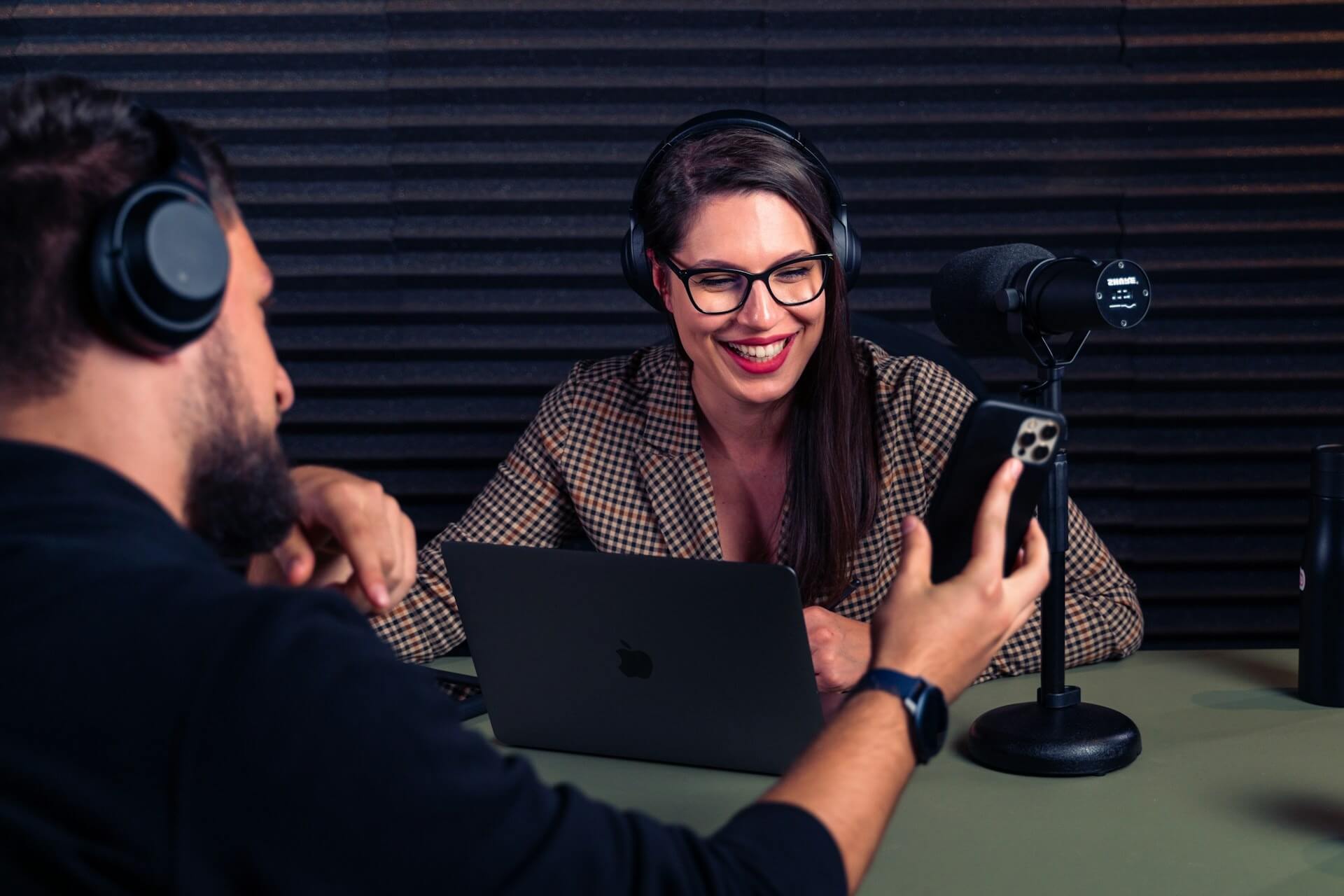
Social listening tools and podcast intelligence tools solve different problems, and using one for the other leaves you blind to the most influential conversation about you. Platforms like Brandwatch, Meltwater, and Sprout Social are built to scan short-form text: tweets, posts, reviews, comments. Podcasts are long-form audio, often 45 to 90 minutes, with no native text to index, no hashtags, and no public API feeding mentions into a dashboard. A social listener cannot hear your name spoken in minute 38 of an episode. Dedicated audio intelligence transcribes every episode, indexes the spoken word, locates the exact moment you are mentioned, and reads the sentiment from how the host actually talks. That is a different engineering problem and a different commercial outcome.
The gap matters because the podcast conversation is where your reputation gets shaped at length and with authority. A tweet decays in a day. An evergreen episode keeps surfacing your name in search and recommendation for years. If your monitoring stack only sees text, the highest-trust mentions of your name are happening in a channel you are not watching.
The core difference: text is structured, audio is not
Social listening works because text is already machine-readable. A post arrives as a string, timestamped, attributed, tagged, and pushed through a public firehose. The hard part there is volume and dedupe, not comprehension. Tools like Brandwatch built their entire architecture on this assumption: ingest structured text at scale, match it against query strings, score it, chart it.
Audio breaks every one of those assumptions. A podcast episode is an opaque media file. Before any monitoring can happen, three things have to occur that have no equivalent in social listening:
- The file has to be found and fetched. Podcasts are scattered across thousands of RSS feeds and hosting platforms with no central index of who said what.
- The audio has to be transcribed accurately. Including names, brands, and jargon that generic speech models routinely mangle.
- The transcript has to be searched and the speaker identified. So you know it was the host endorsing you, not a guest dismissing you.
None of this is a feature you bolt onto a social tool. It is a separate pipeline. We break down the full architecture in our briefing on the future of media monitoring and audio intelligence, which explains why audio became the blind spot in every legacy monitoring stack.
Transcription latency is the hidden tax
Here is the problem nobody selling you a social tool will mention: audio has latency. A tweet is searchable the second it posts. A 70-minute episode has to be downloaded, run through a speech-to-text model, diarized by speaker, and indexed before a single word is searchable. Done naively, that is hours of processing per episode, multiplied across every show in your space publishing daily.
That latency is why most “podcast monitoring” features inside generalist tools are effectively useless. They either rely on the show notes (which mention almost nothing said in the actual conversation) or they batch-process so slowly that you learn about a mention two weeks after the episode dropped. By then the moment to act has passed.
The commercial cost of latency is interception speed. When a host says “I really need to find a good fractional CFO” in minute 22, the value of that signal decays by the hour. Catch it same-day and you send a warm, relevant opener while the episode is still circulating. Catch it in two weeks and the host has already solved the problem with someone else. Dedicated infrastructure exists to compress that latency to near-real-time, because the entire commercial case rests on speed.
Sentiment from spoken context is a different discipline
Social sentiment scoring is crude by necessity. It reads a short string, matches positive and negative tokens, and assigns a label. It works passably on text because text is literal and short.
Spoken language defeats that approach. Tone, sarcasm, hedging, and a 90-second build-up all change the meaning of the same words. A host saying “yeah, sure, they’re great” can be praise or a knife, and only the surrounding context tells you which. A token-matching sentiment model reads the word “great” and scores it positive, exactly backwards.
Reading sentiment from audio requires understanding the conversational context around the mention: what was said before, the host’s known stance, whether the comment was an endorsement, an aside, or a setup for a criticism. This is the difference between knowing you were mentioned and knowing what the mention will do to your reputation. We go deeper on the mechanics in our explainer on what audio intelligence is and why founders need it.
Indexing massive audio files at scale
The scale problem is brutal and invisible. The podcast ecosystem produces millions of hours of new audio every week. To monitor a single name across a niche, you are not searching a few hundred shows once. You are continuously fetching, transcribing, and indexing every new episode from every relevant feed, then making years of back-catalog searchable too.
A social listening index stores compact text. An audio index has to store and search a far larger and messier dataset: full transcripts, speaker maps, timestamps, and links back to the exact second in the source file. The storage, the search infrastructure, and the cost profile are categorically different.
This is precisely why you cannot expect a text-first vendor to “add podcasts.” The economics and the engineering point in opposite directions. A purpose-built audio system treats the transcript-and-timestamp index as the core asset, not an afterthought. That is what lets you click a mention and land on the exact moment it was spoken, instead of being handed a 90-minute file and told to go find it.
What this means for the play you can actually run
Once audio is indexed properly, monitoring stops being passive measurement and becomes a source of moves. This is the part a social dashboard cannot give you, because it never sees the conversation in the first place.
- Footprint awareness. A live view of every show that mentions you, with reach, sentiment, and a link to the exact moment, so a flattering endorsement on a high-reach show becomes proof you can deploy the same day.
- Competitor mapping. A rival’s full podcast footprint over 90 days, including the high-reach shows they appear on that you do not. Those are your open doors.
- Interception. Catching the moment a host voices a problem you solve, paired with a drafted opener tied to that exact episode.
- Narrative defense. A separate lane for negative or sensitive mentions, so a damaging characterization reaches you while you can still respond, not after it has spread.
None of these are possible from text alone. They depend on hearing the spoken word, placing it in context, and surfacing it fast. Seraphina Podcast Intelligence was built around exactly that pipeline, which is why it produces opportunities a social listener structurally cannot.
Where you still want both
To be honest about the work: this is not an argument to abandon social listening. The two cover different terrain and the smart operator runs both. Social tools remain strong for high-volume text channels, fast-moving public sentiment, and campaign tracking across posts and reviews.
What they cannot do is tell you what was said about you in a 60-minute interview that ranks for your name and will keep getting recommended for years. Treat social listening as your text layer and dedicated audio intelligence as your spoken-word layer. The mistake is assuming one vendor’s text engine quietly covers the audio. It does not, and the gap is exactly where your most influential mentions live.
Frequently Asked Questions
Can Brandwatch or Meltwater monitor podcasts?
Only superficially. These tools are built to ingest structured text and typically rely on episode show notes or titles, which capture almost nothing of the actual spoken conversation. They cannot transcribe the audio, locate the moment your name is spoken, or read sentiment from how a host actually talks. For the spoken word you need a purpose-built audio pipeline.
Why can’t a social listening tool just add podcast support?
Because the engineering and economics run in the opposite direction. Text monitoring stores compact, machine-readable strings; audio monitoring requires fetching opaque media files, transcribing them accurately, mapping speakers, and indexing a far larger dataset with links back to the exact second. That is a separate core architecture, not a feature toggle.
How accurate is podcast transcription for monitoring?
Generic speech models are decent on plain speech but routinely mangle names, brands, and industry jargon, which are the exact terms you are monitoring for. Dedicated audio intelligence tunes for those terms and adds speaker identification, so you know whether it was the host endorsing you or a guest dismissing you. Accuracy on the words that matter is the whole point.
What is transcription latency and why does it matter commercially?
Latency is the delay between an episode publishing and its content becoming searchable. A naive pipeline takes hours per long episode, and slow batch processing means you learn about a mention weeks late. Since the value of an interception signal decays by the hour, low latency is the difference between sending a timely opener and missing the moment entirely.
Why is sentiment harder in audio than in text?
Text is literal and short, so token-matching works passably. Spoken language carries tone, sarcasm, hedging, and long build-ups that flip the meaning of the same words. Reading audio sentiment requires understanding the conversational context around the mention, not just scoring isolated words.
Do I still need social listening if I have podcast intelligence?
Yes, for different jobs. Social tools cover high-volume text channels, fast public sentiment, and campaign tracking across posts and reviews. Audio intelligence covers the long-form spoken conversation that text tools never see. Run both as separate layers.
How far back can audio monitoring search?
A purpose-built system indexes new episodes continuously and makes back-catalog episodes searchable too, so a mention from two years ago that still ranks for your name is findable. This matters because evergreen episodes keep surfacing for years, unlike a social post that decays in a day.
Your next move
Audit your current stack with one question: when a host says your name in minute 38 of a 70-minute episode, does anything in your tooling catch it? If the answer is no, your most influential mentions are happening in the dark. Start by mapping the spoken-word layer your text tools cannot see, then read our briefing on the future of media monitoring to understand the full pipeline behind it. The text layer measures the noise. The audio layer is where your reputation and your pipeline actually get decided.