Podcast Intelligence Hub
Personal Brand SEO: Owning Your Narrative on the Web and in Audio

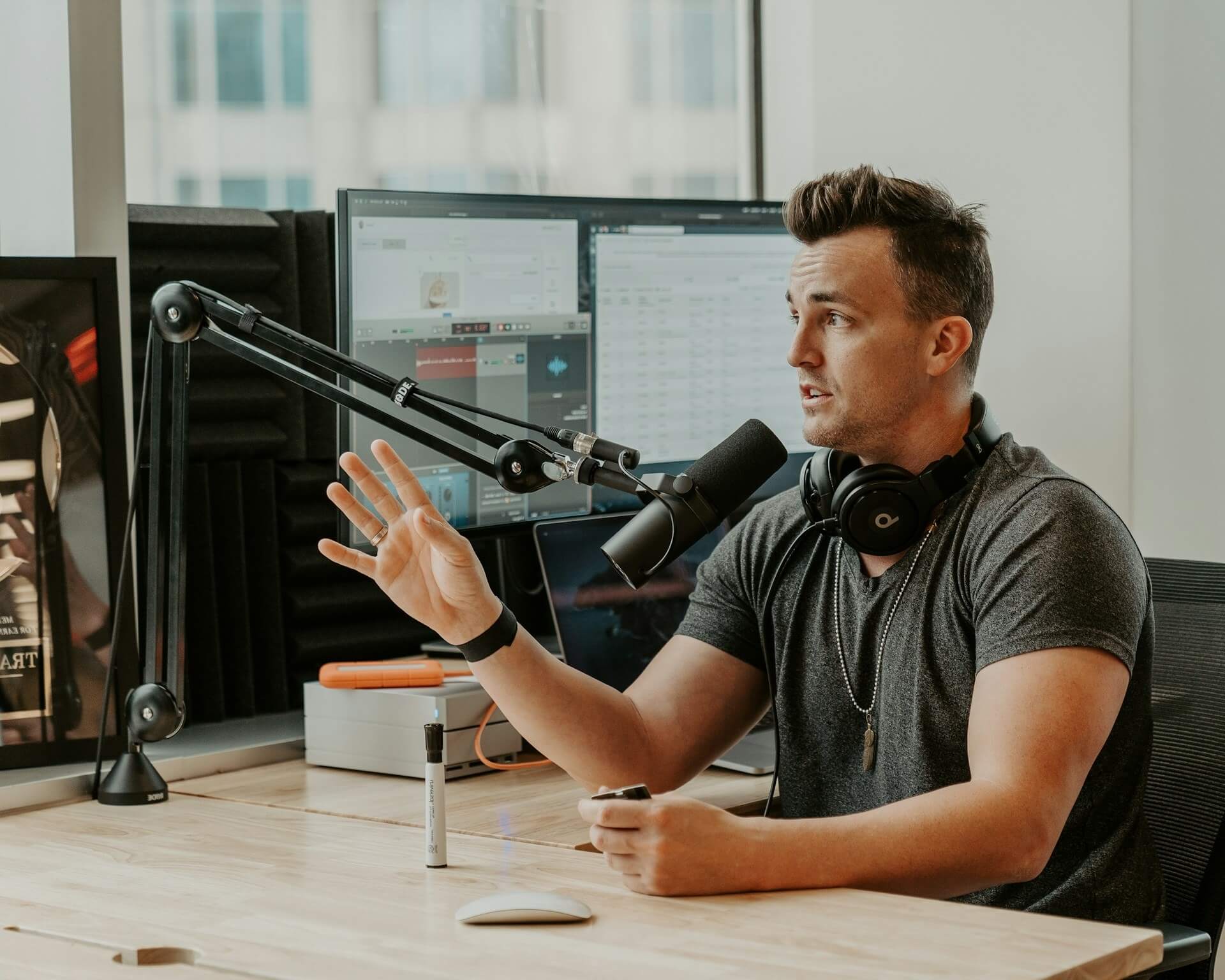
When someone searches your name, the first page of results is your reputation, and most operators have ceded control of it by default. Owning your narrative means engineering three things at once: a knowledge panel that states who you are in Google’s own voice, written results that rank in your favor, and the spoken layer of podcast show notes and transcripts that now surface in search and answer engines. The move is not to chase every link. It is to seed a consistent, structured signal across web and audio so the same narrative repeats wherever someone looks. Do that, and the search page stops being a liability you check nervously and becomes an asset you direct.
This matters more now than it did two years ago. Search results are no longer just blue links. They are knowledge panels, featured snippets, “people also ask” boxes, and increasingly answers assembled by language models that scrape podcast transcripts and show notes as readily as they scrape your website.
If you do not shape what those systems find, someone else’s framing fills the gap. A rival’s narrative, an old headline, a single bad quote pulled out of context. The cost of inattention compounds quietly until the day a prospect, an investor, or a journalist forms their first impression of you from a result you never approved.
The search page is a narrative, not a list
Treat the first page of results for your name as a single document you are authoring. Every element on it is a sentence in that document, and your job is to make the sentences agree.
The elements you are working with are predictable:
- The knowledge panel, the boxed summary on the right that Google treats as fact.
- Your owned properties, your site, your profiles, your published writing.
- Earned coverage, including the show notes and transcripts of podcasts you have appeared on.
- The “people also ask” and related searches that frame what people wonder about you next.
When these tell one coherent story, you have narrative control. When they contradict each other, the searcher resolves the contradiction themselves, and they rarely resolve it in your favor.
Earning a knowledge panel and bending it to your narrative
A knowledge panel is the highest-leverage real estate on your search page because Google presents it as objective truth. You do not buy one. You earn it by giving search engines enough structured, corroborated signal to be confident about who you are.
The mechanics that trigger and feed a panel:
- An entity Google trusts as a source. A Wikidata entry, a consistent professional bio repeated verbatim across authoritative sites, and structured data on your own pages.
- Corroboration across independent sources. The same title, the same company, the same description appearing on third-party properties Google already ranks.
- Sustained mentions. A steady stream of credible coverage that confirms you are a notable, active figure rather than a dormant profile.
Here is the move competitors gloss over. Podcast appearances are entity fuel. Every time a show publishes notes that name you with your correct title and company, you hand Google another independent corroboration of the same fact. Ten consistent show descriptions saying “founder of X, the leading voice on Y” do more to shape a panel than a dozen press releases, because they read as organic third-party confirmation. If you ever claim a panel through Google’s verification, you gain limited editing rights over the image and the featured links. That is direct command over the first thing a searcher sees.
Ranking podcast show notes so the spoken layer works for you
Most people think of a podcast as audio that vanishes after release. In search terms, a strong episode is a long-lived text asset. The show notes, the title, and increasingly the full transcript are indexed, and they often rank for your name plus a topic long after the episode aired.
This is the compounding effect that print coverage cannot match. A magazine feature spikes and decays within a week. An evergreen episode keeps surfacing your name in search and recommendation for years, which is why a single strong guest spot quietly outperforms a flurry of news hits over time.
To make show notes rank in your favor, shape the inputs before the episode publishes:
- Give the host a written bio and episode description with your name, title, and the exact phrasing of your positioning. Most hosts paste what you send.
- Volunteer two or three resource links back to your owned pages, so the notes pass authority to properties you control.
- Use consistent language across every appearance. Repetition of the same descriptor is what teaches search engines your narrative.
The honest part: you cannot force a host to use your copy, and some shows publish thin notes with no transcript at all. You can only make saying yes the path of least resistance, and prioritize shows that publish full, indexed transcripts. Knowing which shows do that before you pitch is its own intelligence problem, and one worth solving deliberately.
The “As heard on” widget and why it compounds
Here is the play almost nobody spells out. An embeddable “As heard on” widget, a block of show logos on your site linking to the episodes you appeared on, does two jobs at once.
To a human visitor, it is instant social proof. It tells a prospect you are the person hosts invite to speak, which is a status signal that closes trust faster than any claim you make about yourself.
To a search engine, it is a structured cluster of links between your owned page and credible third-party audio properties, all reinforcing the same topical association. As you add appearances, the block grows, the associations multiply, and the signal strengthens. The widget compounds. Each new episode you add tightens the link between your name and your topic in the eyes of the systems that decide what ranks. Build it once, feed it after every appearance, and it works on your behalf indefinitely.
Defending the narrative against the result you did not approve
Owning your narrative is not only about adding signal. It is about catching the signal that works against you before it sets.
The dangerous pattern in audio is the offhand mention. A host on a show you never appeared on names you in passing, frames you wrong, or repeats a competitor’s characterization. That spoken moment becomes indexed show-note text and transcript, and it can surface for your name without your ever knowing it exists.
You cannot defend what you cannot see, and you cannot manually listen to every podcast in your space. This is where always-on monitoring becomes the foundation rather than a nice-to-have. Seraphina Podcast Intelligence maintains a live reputation index of every mention of you across podcasts: the show, the sentiment, the reach, and a link to the exact moment. Sensitive or negative mentions route to a separate lane so you act on them while they are still a single episode and not a settled narrative. The full strategy for handling those moments is covered in our briefing on crisis management for founders, but the principle is simple: speed of awareness is the whole game.
Connecting the written and the spoken into one footprint
The operators who win at this stop treating web and audio as separate channels. They run them as one footprint where every piece reinforces the rest.
The loop looks like this:
- A podcast appearance generates indexed show notes and a transcript naming you with consistent positioning.
- You embed that episode in your “As heard on” block, passing proof to humans and signal to search.
- The accumulated appearances corroborate your entity and feed the knowledge panel.
- The panel and ranked notes make you the obvious authority, which makes the next host more likely to book you.
That is a flywheel, and it runs on deliberate inputs rather than luck. The wider mechanics of building and defending this footprint, from the properties you own to the cadence of coverage, are laid out in full in our guide to personal brand and reputation management. Pair that with the search-and-audio tactics here, and you have command of both the written and spoken layers of your name.
Where this takes real work, and where it does not
The honest accounting matters, because credibility is the point.
What takes real, sustained effort: earning enough corroborated coverage to trigger a knowledge panel, getting hosts to publish your preferred phrasing, and keeping the “As heard on” block current. None of it happens from a single push. It is a discipline measured in quarters, not days.
What does not require effort, and is the most common point of failure: knowing what is already being said about you. Operators waste months reacting to results they discover by accident. Monitoring removes that blind spot entirely, which means your effort goes into shaping the narrative instead of being surprised by it.
Frequently Asked Questions
How do podcast show notes actually affect what shows up when I search my name?
Show notes, episode titles, and transcripts are indexed text. When they name you alongside your topic, they can rank for your name and for “your name plus subject” queries, and they feed answer engines that assemble responses from that text. A handful of well-written notes across strong shows can occupy several slots on your search page.
Can I get a Google knowledge panel just from podcast appearances?
Not from appearances alone, but they are powerful corroborating signal. A panel is triggered when independent sources consistently confirm the same facts about you. Repeated, consistent show descriptions naming your title and company act as exactly that kind of third-party confirmation, alongside structured data and an entity Google trusts.
What is an “As heard on” widget and is it worth building?
It is an embeddable block of podcast logos on your site, each linking to an episode you appeared on. It serves humans as social proof and search engines as a structured cluster of authority-passing links tied to your topic. It is worth building because it compounds: every appearance you add strengthens the association without you touching the rest.
How do I get hosts to describe me the way I want?
Send a written bio and a suggested episode description with your exact positioning, plus two or three resource links. Most hosts paste what you provide because it saves them work. Use identical descriptor language across every show so the repetition teaches search engines your narrative.
What if a podcast says something inaccurate about me?
That spoken moment can become indexed text and surface for your name. The priority is catching it while it is still one episode rather than a repeated characterization. Continuous monitoring of mentions, with a dedicated lane for negative or sensitive ones, is how you intervene early enough to matter.
Does print coverage rank better than podcast coverage?
A major print feature can rank well, but it tends to spike and decay. An evergreen episode keeps surfacing for years through search and recommendation, so audio coverage often compounds where print fades. The strongest footprint uses both and reinforces them with owned pages.
How quickly does any of this change my search results?
Show notes can index within days, but moving a knowledge panel or reshaping the full first page is a matter of months of consistent signal. Treat it as a quarterly discipline. The fastest win available immediately is simply knowing what is already there, so you stop being surprised and start directing.
Your next move
Search your own name today and read the first page as a document you authored. Note every result that contradicts your narrative and every slot a stronger asset should occupy. Then make the inputs deliberate: consistent positioning sent to every host, an “As heard on” block you feed after each appearance, and monitoring so no spoken mention sets without your knowledge. Owning the narrative is not a one-time fix. It is a footprint you direct, in text and in audio, and it starts with seeing the full picture instead of guessing at it.